Bill Gates’ recent comments about the future of work have intensified global debates on how artificial intelligence will reshape the job market. As AI becomes more advanced and capable of performing complex tasks, Gates warns that many traditional roles may disappear or be drastically reduced. His prediction focuses on the types of human abilities that AI cannot fully replace, even with rapid technological progress.
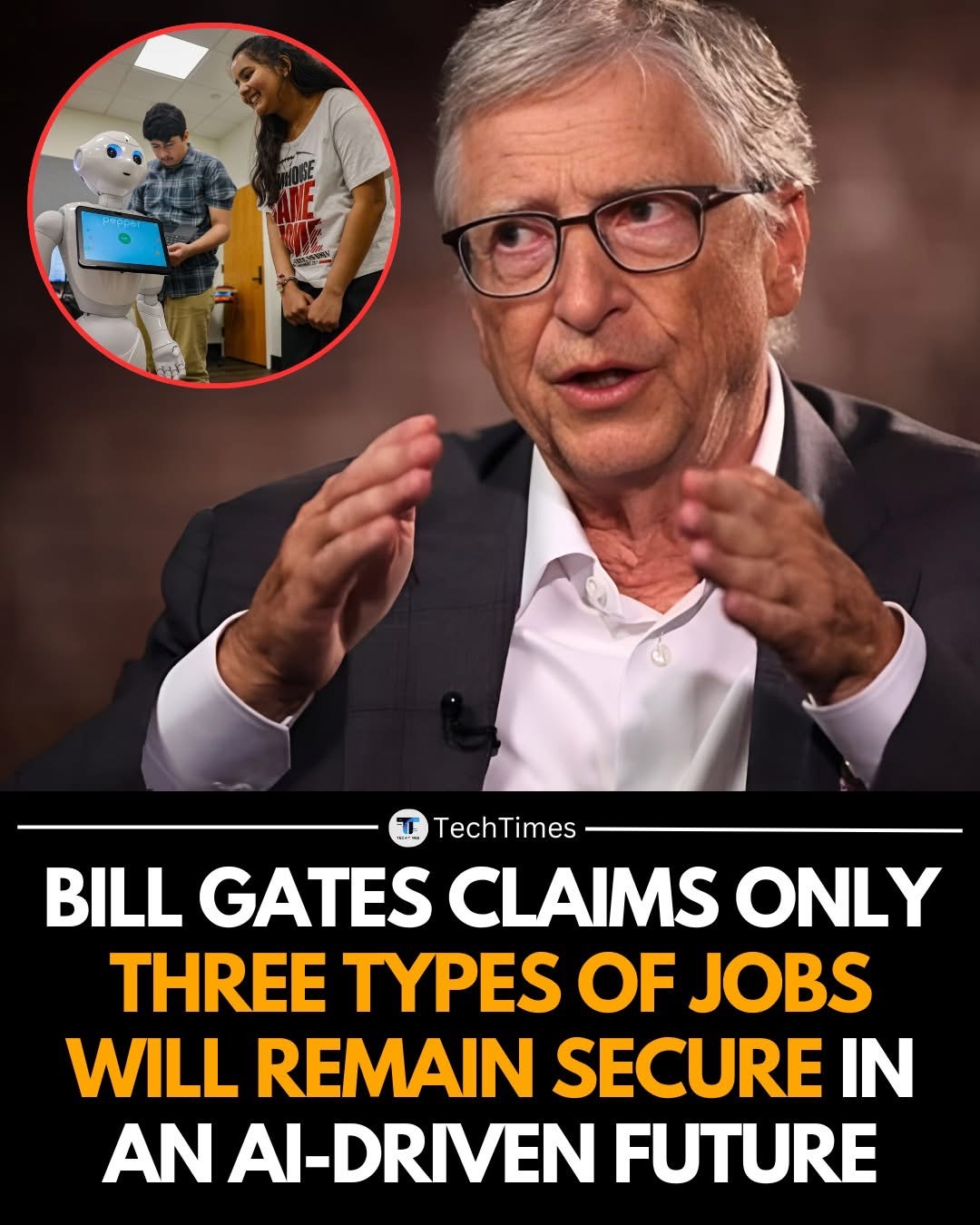
According to Gates, the safest long-term jobs fall into three categories: creative work, which relies on unique imagination and original thought; caregiving roles, which require empathy, emotional intelligence, and human presence; and strategic or critical-thinking positions, such as leadership, analysis, and high-level decision-making. These areas depend heavily on qualities that remain distinctly human and are difficult to replicate through algorithms or robotics.
His message serves as a call for adaptation. Gates stresses that societies must reskill their workforce, strengthen education systems, and prepare for a future where millions of workers may need to shift into more human-centered careers. The conversation also raises important ethical questions about inequality, job displacement, and how countries will support workers during the transition to an AI-driven economy.
#FutureOfWork #BillGates #AIRevolution #JobSecurity #TechTrends