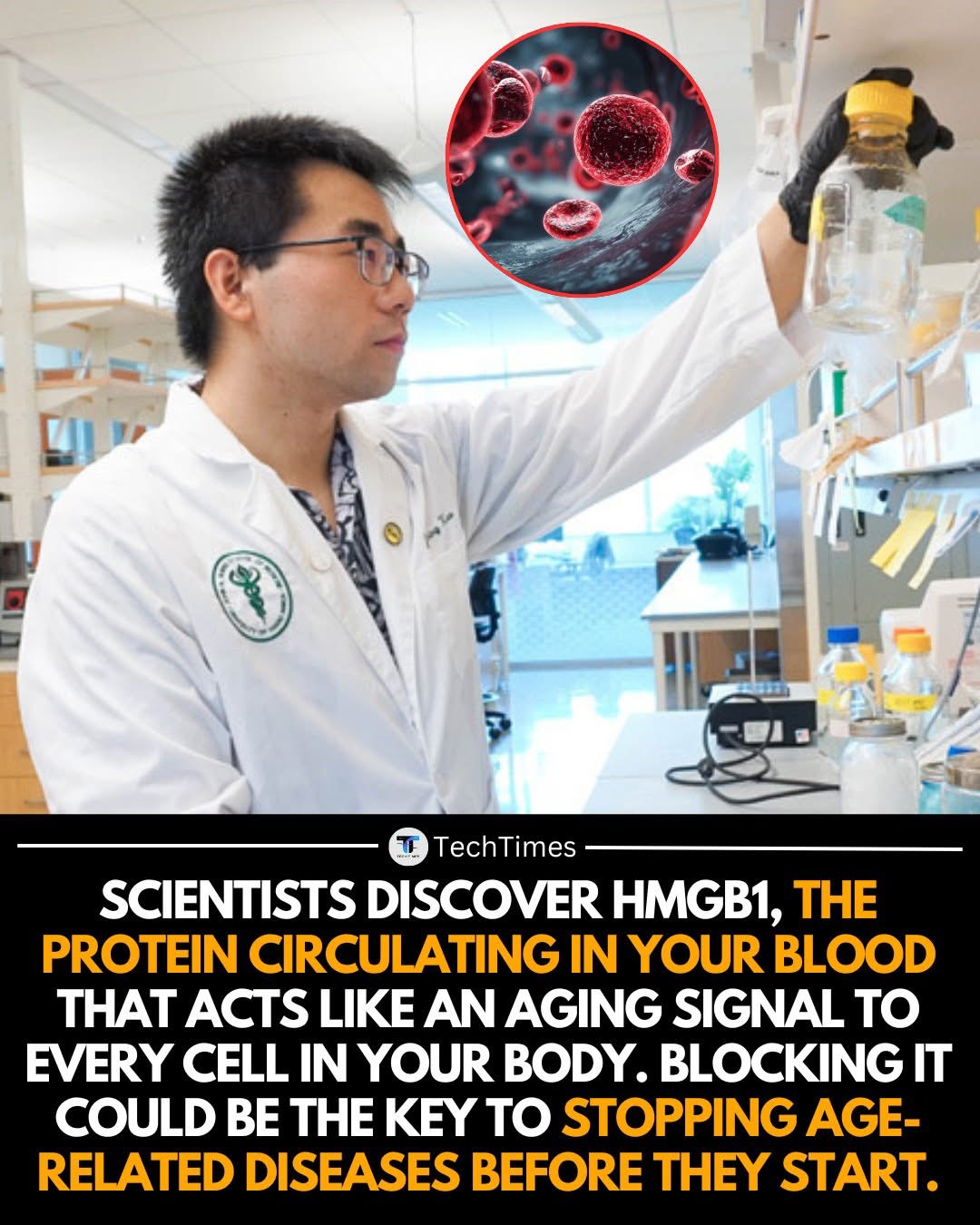
Researchers have identified HMGB1 as one of the major molecular “broadcast signals” that tells your cells to age faster. As levels of this protein rise in the bloodstream, inflammation increases, DNA-repair processes slow down, and tissues across the body begin to show signs of biological decline. What makes the discovery so extraordinary is that when HMGB1 is blocked in animal studies, organs start functioning more like those of much younger individuals.
This breakthrough is fueling a new wave of anti-aging research focused on stopping age-related diseases before they develop — including Alzheimer’s, heart disease, and metabolic decline. Instead of treating symptoms late in life, scientists believe that targeting HMGB1 could slow or even reverse the cellular triggers behind aging itself. Early experiments show improvements in energy levels, reduced inflammation, and more youthful cell behavior when the protein’s activity is suppressed.
If future trials continue to show promise, HMGB1 inhibitors could become one of the first medical tools designed not just to extend lifespan, but to dramatically improve healthspan — the number of years we live disease-free. For the first time, aging is starting to look less like fate and more like a process we may one day be able to control.
#AntiAgingScience #LongevityResearch #HealthBreakthrough #FutureMedicine #BiotechRevolution